
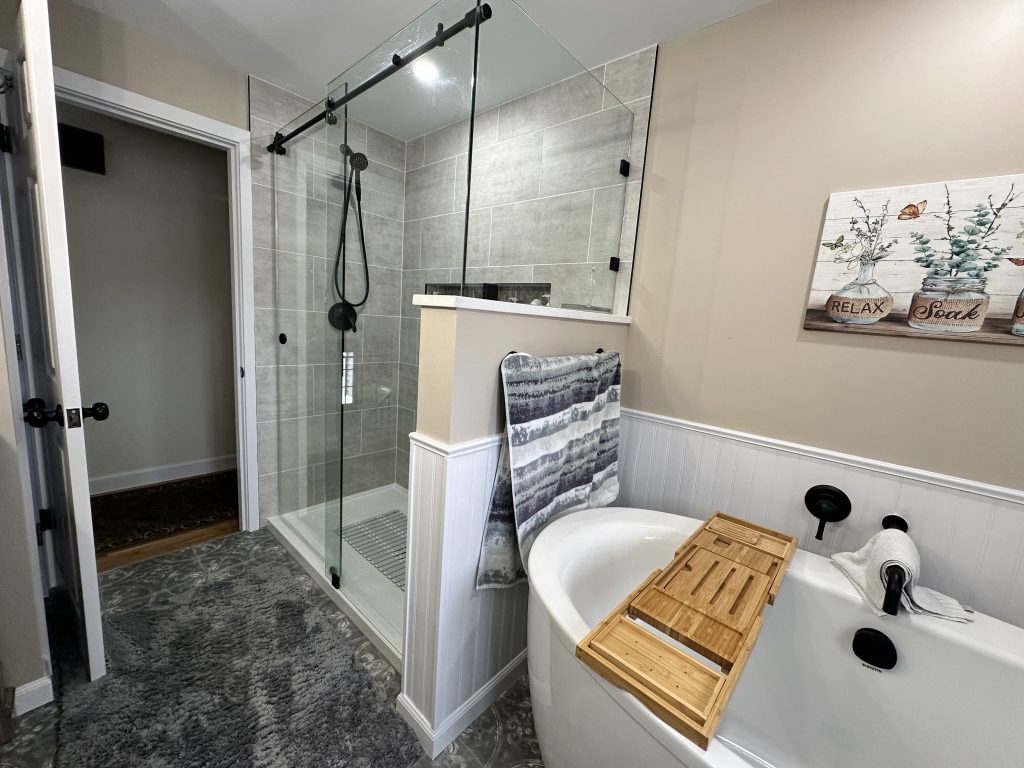
Your bathroom works hard every single day. It’s the first room you see in the morning and often the last before bed. When it’s not functioning well—or just feels dated and tired—it affects how you start and end each day.
A bathroom remodel can transform that experience. But before demo day arrives, thoughtful planning makes the difference between a project that flows smoothly and one that stalls out. This checklist will help you think through the key decisions, anticipate challenges, and set your remodel up for success.
Start With Your Goals
Before picking tile samples or browsing vanities, get clear on what you’re trying to accomplish. Your goals shape every decision that follows.
Ask yourself: What frustrates you most about your current bathroom? Is it the cramped layout? Lack of storage? Outdated fixtures that waste water and look tired? A shower that’s too small or a tub nobody uses?
Then think about what you want to gain. More space? A spa-like retreat? Better functionality for your morning routine? Improved accessibility as you age in place? A bathroom that finally matches the rest of your updated home?
The clearer you are on your “why,” the easier every downstream decision becomes.
Assess Your Current Bathroom
Take an honest look at what you’re working with. Understanding your starting point helps you and your contractor plan realistically.
Plumbing condition. How old are your pipes? Homes in Worcester County often have plumbing from the 1950s, 60s, or earlier. Galvanized pipes corrode over time; cast iron drains can deteriorate. If your home’s plumbing hasn’t been updated, your remodel may be the right time—especially since walls will already be open.
Electrical situation. Older bathrooms often lack adequate electrical capacity. Modern code requires GFCI outlets near water sources, and you may want additional circuits for heated floors, towel warmers, or upgraded lighting. Check whether your electrical panel can handle added load.
Ventilation. A properly sized exhaust fan is essential for moisture control. Many older bathrooms have undersized or poorly ducted fans—or none at all. Moisture problems lead to mold, mildew, and premature deterioration of finishes.
Subfloor and structure. Water damage around toilets, tubs, and showers is common in older bathrooms. Soft spots in the floor, discoloration, or musty smells can indicate damage that needs addressing before new finishes go in.
Layout constraints. Where are your drain lines and water supply? Moving a toilet is expensive because of the drain location. Sinks and showers have more flexibility. Understanding these constraints early helps you design realistically.
Understand Massachusetts-Specific Requirements
Bathroom remodels in Massachusetts need to comply with state and local building codes. A few things to keep in mind:
Permits. Most bathroom remodels require permits—especially if you’re changing plumbing, electrical, or layout. Permit costs in Massachusetts typically range from $200 to $600 depending on your town and scope. A reputable contractor handles the permit process, but you should know it’s part of the timeline.
Inspections. Permitted work requires inspections at key stages—rough plumbing, rough electrical, and final. This adds time but ensures work is done safely and to code.
Ventilation requirements. Massachusetts code requires exhaust ventilation in bathrooms. If your current bathroom lacks adequate ventilation, your remodel will need to include it.
Water efficiency. Massachusetts has adopted water efficiency standards. New toilets, faucets, and showerheads must meet these requirements—which is good news for your water bill.
Older homes. Many Worcester County homes were built before 1978 and may contain lead paint. Contractors working in these homes must follow EPA lead-safe work practices. If asbestos is present in flooring or other materials, proper abatement is required before remodeling.
Set a Realistic Budget
Bathroom remodels in Worcester County typically range from $29,000 for a standard renovation to $90,000 or more for an upscale primary bathroom. Most mid-range projects fall between $22,000 and $35,000.
Where does that money go? A typical breakdown:
Labor (40–60% of budget). Skilled tradespeople—plumbers, electricians, tile setters, carpenters—make up the largest portion of your investment. Massachusetts labor costs run higher than national averages due to cost of living and demand for skilled trades.
Fixtures and finishes (25–40%). This includes your toilet, vanity, sink, faucets, shower/tub, tile, lighting, and accessories. Material choices have the biggest impact on where you land in the price range.
Structural and mechanical (10–20%). Plumbing modifications, electrical upgrades, subfloor repair, and ventilation work. These costs vary significantly depending on your bathroom’s condition and how much you’re changing the layout.
Permits, design, contingency (5–15%). Permit fees, any design services, and a buffer for surprises. We always recommend building in 10–15% contingency—bathrooms are notorious for hidden issues once walls open up.
Decide: Renovation or Remodel?
These terms get used interchangeably, but they mean different things—and the distinction affects budget and timeline.
Renovation updates fixtures, finishes, and surfaces while keeping the existing layout. You might replace the vanity, re-tile the shower, swap fixtures, and paint—but the toilet stays where it is and walls don’t move. Renovations are faster, less expensive, and less disruptive.
Remodel involves changing the layout, moving fixtures, or altering the footprint. This might mean relocating the shower, expanding into an adjacent closet, or reconfiguring the entire space. Remodels cost more and take longer but let you truly reimagine the room.
Which makes sense depends on whether your current layout works or whether the layout itself is the problem.
Think Through Layout and Flow
If you are changing the layout, consider how you’ll actually use the space:
The work triangle. In bathrooms, think about the relationship between toilet, sink, and shower. You don’t want to climb over obstacles during your morning routine.
Door swing. Does your door swing into the vanity or block the toilet? Pocket doors or barn doors can solve tight clearances without sacrificing privacy.
Natural light. If you have a window, build your layout to maximize daylight. Consider a frosted window in the shower area if privacy allows.
Storage zones. Where will towels live? Toiletries? Cleaning supplies? Built-in niches, medicine cabinets, and vanity storage should be planned around how you actually use the bathroom.
Clearances. Code requires minimum clearances around toilets (typically 15 inches from center to side wall) and in front of fixtures. Your contractor will ensure compliance, but keep this in mind if you’re sketching layouts.
Prioritize Your Must-Haves vs. Nice-to-Haves
Make a list—it helps when you need to make tradeoffs:
Common bathroom features to consider:
- Walk-in shower vs. tub/shower combo vs. freestanding tub
- Single or double vanity
- Heated floors
- Towel warmer
- Upgraded lighting (sconces, recessed, backlit mirrors)
- Body sprays or rain showerhead
- Built-in shower niches and benches
- Linen closet or additional storage
- Makeup vanity area
- Smart features (motion-sensor faucets, smart mirrors, integrated speakers)
- Accessibility features (grab bars, curbless shower, comfort-height toilet)
Knowing your priorities helps your contractor design around what matters most while finding places to save where it matters less.
Gather Your Inspiration
Before your first conversation with a contractor, collect ideas that resonate:
- Save photos from Houzz, Pinterest, or Instagram
- Note specific elements you love—a particular tile pattern, a floating vanity, a certain fixture style
- Think about what you don’t want (trends that feel dated, features that seem impractical)
- Consider the overall feeling you’re after—bright and airy? Warm and cozy? Modern and minimal? Classic and timeless?
You don’t need a complete design. A good design-build team translates your inspiration into a practical plan. But reference points make those conversations much more productive.
Understand the Timeline
A typical bathroom remodel takes 3 to 6 weeks depending on scope. Factors that extend timelines:
- Permit approval (varies by town—some are quick, others take weeks)
- Custom orders for vanities, tile, or fixtures
- Extent of plumbing or electrical changes
- Discovery of hidden damage requiring repair
- Inspection scheduling
Plan for disruption. If you’re remodeling your only bathroom, you’ll need alternative arrangements during parts of the project. If it’s a second bathroom, daily life continues more easily—but expect some noise and contractor traffic.
Choose the Right Partner
Your contractor choice shapes your entire experience. Look for:
Design-build capability. A single team handling design through construction means better communication, fewer coordination gaps, and accountability from start to finish.
Local experience. A contractor familiar with Massachusetts codes, local permit processes, and the quirks of New England homes—including older plumbing and building materials—navigates challenges more smoothly.
Clear communication. You should understand what’s happening, when, and why. Look for a company that keeps you informed at every stage.
Attention to detail. Bathrooms are small spaces where craftsmanship shows. Tile work, grout lines, fixture alignment, caulk joints—these details matter and reveal the quality of the team.
Listening first. The right contractor asks questions before offering solutions. Your needs should drive the project.
Your Next Step
Ready to start the conversation? The best first step is a consultation where you can walk through your space, share your vision, and get expert input on what’s possible.
At RenoVista Construction, we approach every bathroom project by listening first. We want to understand how you live, what frustrates you about your current space, and what would make your daily routine better. From there, we design and build a bathroom that works for your life.
Schedule your free consultation or call us at (508) 434-0307.
RenoVista Construction is a design-build remodeling firm based in Auburn, Massachusetts, serving Worcester County, Metrowest, Norfolk County, and surrounding communities. We specialize in bathroom remodeling, kitchens, basements, decks, and home additions.