Your basement can be almost anything you need it to be. That’s what makes finishing one so exciting—and sometimes overwhelming. Where do you even start?
The best basement designs begin with how you actually live. A family with teenagers needs something different than empty nesters. Someone working from home has different priorities than someone training for a marathon.
Here’s a look at popular basement uses and what makes each one work, so you can start imagining what yours could become.
The Home Office That Actually Works
Remote work isn’t going anywhere, and kitchen tables only go so far. A basement office gives you separation between work and home life—literally a floor apart.
What makes a great basement office:
A dedicated entrance or private zone helps you mentally “arrive” at work. Natural light from egress windows makes a real difference in how you feel during long workdays. If you don’t have much window access, good artificial lighting—layered ambient, task, and accent lights—prevents that bunker feeling.
Sound isolation matters too. Ceiling insulation between the basement and main floor keeps household noise from bleeding into video calls. Built-in shelving and cabinetry keep your workspace organized without cluttering the room.
Consider adding a small powder room nearby so you’re not running upstairs between meetings.
Who it’s perfect for: Remote workers, entrepreneurs, anyone who needs focus without household interruptions. Also works beautifully as a creative studio for artists, crafters, or musicians.
The Home Gym You’ll Actually Use
Gym memberships are great until you factor in the commute, the waiting for equipment, and the motivation it takes to leave the house. A basement gym removes every barrier between you and your workout.
What makes a great basement gym:
Flooring is everything. Rubber flooring or high-quality vinyl handles dropped weights, absorbs impact, and cleans easily. Ceiling height matters for overhead movements—if yours is tight, plan your equipment around it.
Mirrors make spaces feel larger and let you check form. Good ventilation keeps air fresh during intense sessions; your HVAC system may need adjustments, or you might add a dedicated exhaust fan. Rubber floor mats help but don’t solve airflow on their own.
Think about what you’ll actually do. Cardio equipment, free weights, yoga space, a TRX anchor point? Design around your real routine, not an imagined one. Leave room to grow—your fitness interests may evolve.
Who it’s perfect for: Fitness enthusiasts, busy parents who can’t make gym hours work, anyone who values consistency over variety. Pair it with a small bathroom and you’ve got a complete post-workout setup without tracking sweat through the house.
The Entertainment Space for Game Days and Movie Nights
This is the classic basement dream: a dedicated space for watching the big game, hosting movie marathons, or gathering friends without taking over the main living area.
What makes a great entertainment basement:
Start with the screen. A large TV or projector setup anchors the room. If going with a projector, ceiling height and ambient light control become important—blackout options for windows make a difference.
Sound is half the experience. Built-in ceiling speakers, a soundbar setup, or a full surround system transforms movie watching. Acoustic treatments (even simple ones) prevent that echoey basement sound.
Comfortable seating is non-negotiable. Theater recliners, a deep sectional, or a combination of both—whatever fits your style. Just make sure everyone has a good sightline to the screen.
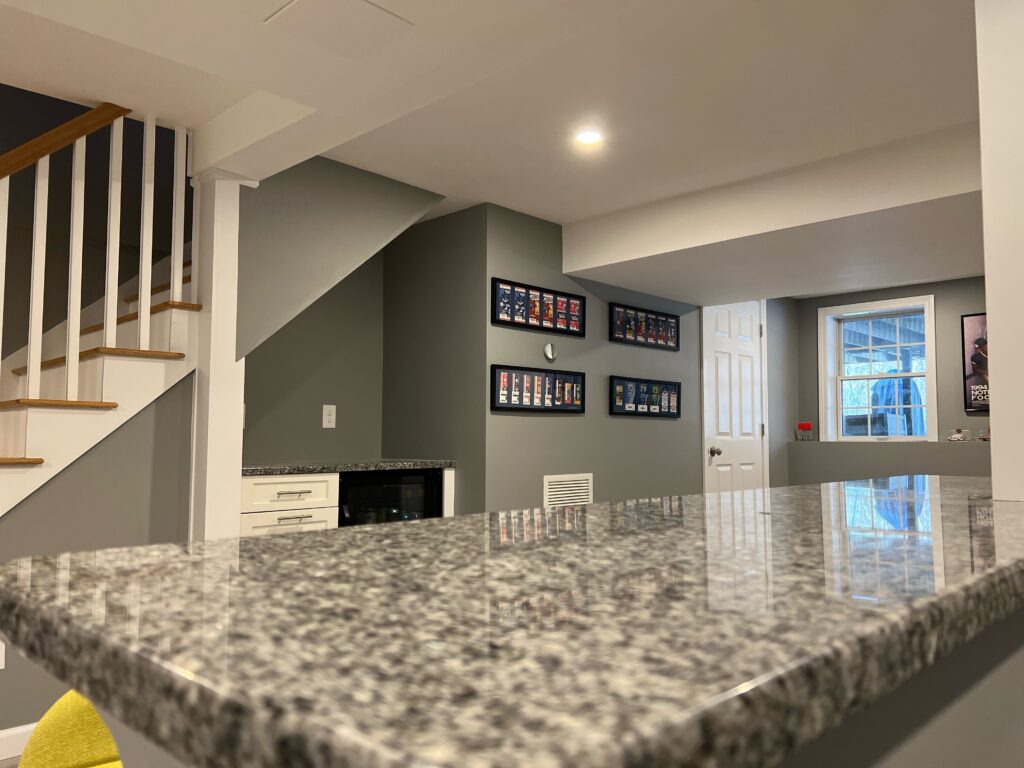
A wet bar or kitchenette elevates hosting. Even a small setup with a mini fridge, sink, and counter means fewer trips upstairs. Add a beverage cooler or kegerator if that’s your style.
Who it’s perfect for: Sports fans, movie lovers, families with teenagers who need their own hangout space, anyone who entertains regularly.
The In-Law Suite or Guest Quarters
Multi-generational living is increasingly common. Whether you’re creating space for aging parents, adult children, or frequent long-term guests, a basement suite offers privacy and independence while keeping family close.
What makes a great in-law suite:
A full bathroom is essential—ideally with accessibility in mind. Grab bars, a curbless shower, and wider doorways aren’t just for current needs; they’re smart future-proofing.
A bedroom with an egress window is required by Massachusetts code for any sleeping room. This provides both emergency escape and natural light. Make it feel like a real bedroom, not an afterthought.
A small kitchenette allows for independence without duplicating your main kitchen. A sink, mini fridge, microwave, and small cooktop cover most needs.
Private entry is ideal if your layout allows it. Even without a separate entrance, thoughtful layout can create a sense of separate living space.
Soundproofing between floors gives everyone privacy. Insulation choices during framing make a big difference here.
Who it’s perfect for: Families with aging parents who want to stay close, homeowners with adult children transitioning back home, anyone who hosts extended family visits regularly.
The Kids’ Zone That Grows With Them
Kids need space to play, learn, and eventually hang out with friends away from parents. A basement playroom evolves as they do—from toy central to gaming headquarters to teen hangout.
What makes a great kids’ basement:
Durable, cleanable surfaces are key. Luxury vinyl plank flooring handles spills, art projects, and roughhousing. Skip the carpet if you can; it shows every stain.
Storage, storage, storage. Built-in cubbies, closets, and cabinetry keep toys contained. Design with flexibility in mind—what holds stuffed animals today holds video games tomorrow.
Zones help. A craft table area, a reading nook, an open play space, a TV zone—separating activities makes the room more functional and easier to keep organized.
Safety matters for young kids. Outlet covers, padded flooring in play areas, and railings on stairs are baseline. As they grow, the space can mature with them.
Who it’s perfect for: Families with young children, families with teenagers who need their own territory, multi-kid households where everyone needs space to spread out.
The Combination Space That Does It All
Most families don’t have single-purpose needs. The beauty of a basement is zoning it for multiple uses within one footprint.
Popular combinations:
- Office + gym. Work out before the day starts, then pivot to focused work. A glass partition or half wall separates the zones visually while keeping the space open.
- Media room + bar + game area. The screen anchors one end, a wet bar serves as a natural divider, and a pool table, darts, or card table fills the other end.
- Guest suite + living area. A bedroom and bathroom in one section, with a comfortable living space that guests can enjoy privately—or that the family uses when no one’s visiting.
- Kids’ area + adult retreat. Younger kids on one side with play space and storage, a quieter seating area for parents on the other. As kids grow, the whole space becomes a family hangout.
The key is thoughtful layout. Define zones with flooring transitions, partial walls, ceiling treatments, or furniture arrangement. Each area should feel intentional, not like leftovers.
Finishing Touches That Elevate Any Basement
Regardless of your primary use, certain details make basement spaces feel like true living areas rather than afterthoughts.
Lighting layers. Recessed cans provide general illumination. Lamps, sconces, and under-cabinet lights add warmth and dimension. Dimmers let you shift the mood.
Ceiling treatment. Drywall gives a finished look. Drop ceilings allow easy access to mechanicals. Exposed ceilings painted a dark color can feel industrial-chic and maximize height. Each has tradeoffs depending on your style and practical needs.
Thoughtful color choices. Basements can feel dark. Lighter wall colors, strategic mirrors, and reflective surfaces help. But don’t be afraid of cozy either—darker, warmer tones work beautifully in media rooms and bedrooms.
Quality flooring. Luxury vinyl plank is the go-to for most basement uses: water-resistant, durable, comfortable underfoot, and available in styles that mimic wood or stone convincingly. Carpet tiles work well in specific zones like bedrooms or play areas.
Climate control. Basements can run cooler. Ensure your HVAC reaches the new space adequately, and remember that Massachusetts requires mechanical ventilation (ERV/HRV) in finished basements.
Finding Your Vision
The best basement isn’t the one with the most features—it’s the one designed around how your family actually lives. Maybe that’s a single-purpose dream gym. Maybe it’s a multi-zone space that adapts as your family grows. Maybe it’s finally creating a real guest room so visitors don’t sleep on the pullout.
Start with your “why,” gather inspiration, and then have a conversation with someone who can help translate ideas into reality.
Ready to Explore What’s Possible?
At RenoVista Construction, we’ve helped 57+ families in Worcester County transform their basements into spaces they love. We start every project by listening—understanding how you live, what you need, and what will make your home work better for your family.
Schedule a free consultation to walk through your space together, or call us at (508) 434-0307.
Want to understand costs first? Check out our basement remodeling pricing guide for Worcester County ranges.
RenoVista Construction is a design-build remodeling firm based in Auburn, Massachusetts, serving Worcester County, Metrowest, Norfolk County, and surrounding communities. We specialize in basement remodeling, kitchens, bathrooms, decks, and home additions.