
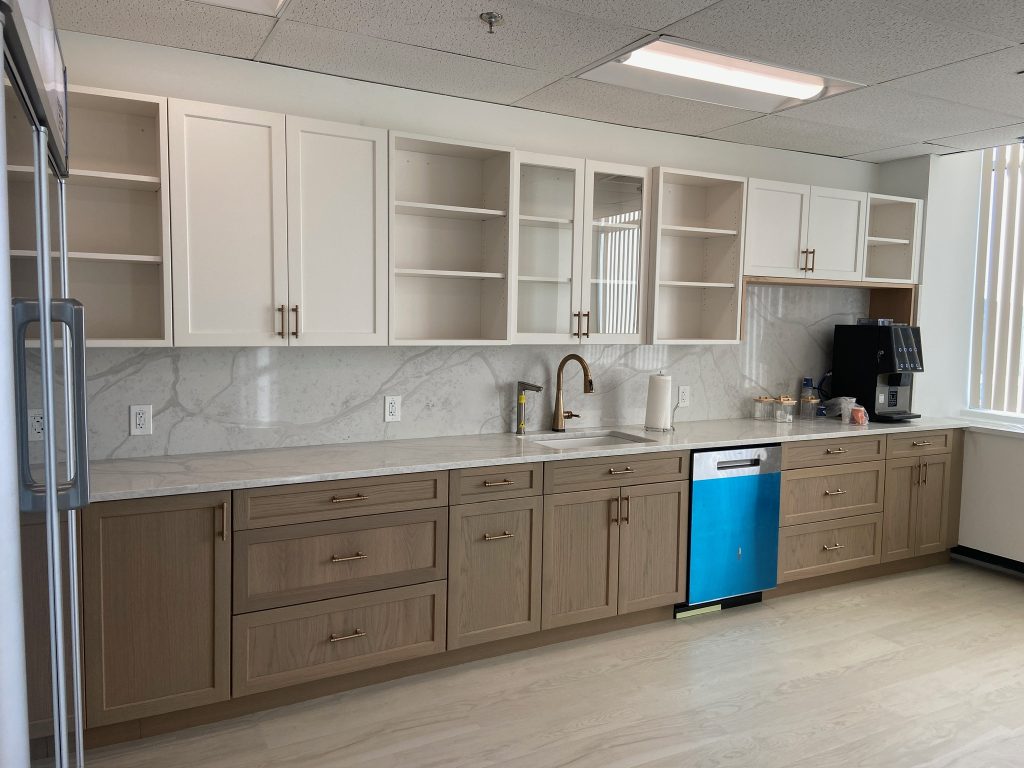
Choosing who will transform your kitchen is one of the most important decisions you’ll make during a remodel. The contractor you hire determines not just the quality of the finished space, but also how smooth—or stressful—the entire process feels.
The right questions help you separate experienced professionals from companies that might leave you with regrets. Before you sign anything, here’s what to ask.
Questions About Experience and Credentials
1. Are you licensed, bonded, and insured in Massachusetts?
This isn’t a formality—it’s protection. A licensed contractor has demonstrated competency through testing and meets state requirements for the work. Bonding protects you financially if the contractor fails to complete the job or pay subcontractors. Insurance (both liability and workers’ compensation) means you’re not responsible for accidents or injuries that happen on your property.
Ask to see current documentation. A reputable contractor will have copies ready and won’t hesitate to provide them.
2. How long have you been doing kitchen remodels specifically?
Experience matters, but the type of experience matters more. A contractor who has spent twenty years building new homes operates differently than one who specializes in renovating existing kitchens. Remodeling requires working around existing structures, handling surprises behind walls, and minimizing disruption to your daily life—skills that come from doing this work repeatedly.
Ask how many kitchen projects they complete in a typical year. A contractor who does two or three kitchens annually won’t have the same refined process as one who does fifteen or twenty.
3. Can I see examples of completed kitchens similar to mine?
A portfolio tells you what level of work to expect. Look for projects that match your scope—if you’re planning a layout change, you want to see kitchens where they’ve moved walls or relocated plumbing. If you have an older Massachusetts home, ask about experience with homes built in the same era, since they often share similar challenges.
Photos are helpful, but ask if you can speak with past clients directly. References from projects completed in the last two to three years give you the most relevant insight into how the company operates today.
Questions About Process and Communication
4. Who handles the design, and who handles the construction?
This question reveals how the company is structured—and how much coordination will fall on you.
Some contractors are “build only,” meaning you’ll need to hire a separate designer or architect, then bring finalized plans to the contractor for bidding. This approach requires you to manage communication between parties and can create gaps when the design team’s vision doesn’t match construction realities.
Design-build firms handle both under one roof. The same team that creates your layout also builds it, which eliminates the back-and-forth and keeps design decisions grounded in what’s actually buildable within your budget.
Neither approach is inherently wrong, but understanding the structure upfront prevents surprises later.
5. Who will be my main point of contact during the project?
During construction, questions will come up. Decisions will need to be made. You need to know exactly who to call—and how quickly they typically respond.
Will you communicate primarily with the company owner, a project manager, or the lead carpenter on site? What’s their preferred method—phone, text, email? What’s a realistic response time? Clear answers here indicate a company with established communication systems rather than one that operates reactively.
6. What does your typical project timeline look like?
Kitchen remodels involve multiple phases: design and planning, material ordering (cabinets alone can take four to eight weeks), permitting, demolition, rough work, installation, and finishing. An experienced contractor should be able to walk you through each phase and give you realistic timeframes.
Ask specifically about how long your kitchen will be unusable. This affects how you’ll manage meals during construction and whether you need to plan for a temporary kitchen setup elsewhere in the house.
Be wary of timelines that sound too fast. Rushing leads to mistakes, and quality work takes the time it takes.
7. How do you handle communication and updates during construction?
Some companies provide weekly written updates. Others prefer daily check-ins when work is happening. Some use project management software where you can see progress photos and milestone tracking.
There’s no single right answer, but you should know what to expect before work begins. The worst scenario is radio silence while strangers are tearing apart your kitchen.
Questions About Budget and Payments
8. How detailed is your estimate, and what does it include?
Vague estimates lead to budget surprises. A thorough estimate breaks down costs by category: demolition, cabinetry, countertops, plumbing, electrical, flooring, fixtures, appliances, labor, permits, and so on.
Ask specifically what’s included and what’s not. Does the estimate cover appliance installation or just delivery? Are permit fees included? What about disposal of old materials? The more line-item detail, the easier it is to compare quotes accurately and understand where your money goes.
9. How do you handle unexpected issues—like finding water damage or outdated wiring?
Older homes in Massachusetts often reveal surprises once demolition starts. Experienced contractors expect this and have a process for handling it.
Ask whether they use formal change orders—written documentation that describes the issue, the proposed solution, and the cost impact before any additional work begins. This protects both parties and prevents disputes about what was agreed to.
Also ask whether they recommend building a contingency into your budget. Most professionals suggest 10 to 15 percent for unexpected discoveries.
10. What is your payment schedule?
Payment structures vary, but the pattern should make sense: a deposit to secure materials and scheduling, progress payments at defined milestones, and a final payment upon completion.
Be cautious of contractors who want a large percentage upfront before any work begins, or who push for full payment before the punch list is complete. A reasonable schedule ties payments to actual progress and keeps both parties accountable.
Questions About the Work Itself
11. Will your own employees do the work, or do you use subcontractors?
Most kitchen remodels involve some specialized trades—electrical, plumbing, tile work—that may be handled by subcontractors. That’s normal. What matters is how the contractor manages those relationships.
Ask whether they work with the same subcontractors regularly (a sign of established, trusted relationships) or shop for the lowest bidder on each job. Ask who is responsible for the quality of subcontracted work and who your point of contact is if issues arise with a specific trade.
12. Who pulls the permits, and who is responsible for inspections?
Building permits are required for most kitchen remodels in Massachusetts, especially those involving electrical, plumbing, or structural changes. The contractor should handle permit applications and schedule required inspections as part of their service.
When a contractor pulls the permit, they’re taking responsibility for the work meeting code. If they ask you to pull permits yourself, that’s a red flag—it can shift liability to you and may indicate they’re trying to avoid inspection.
13. What warranties do you provide?
Understand what’s covered and for how long. Most quality contractors offer a workmanship warranty (typically one to two years) that covers defects in their labor. This is separate from manufacturer warranties on products like appliances, cabinets, or countertops.
Get warranty terms in writing. Ask what the process looks like if something goes wrong after the project is complete—who do you contact, and what’s the typical response time?
Questions About Working in Your Home
14. What hours will workers be on site, and how do you handle access?
Construction crews typically arrive early. Know when to expect them and when they’ll leave. If you work from home, ask about noise-intensive work and whether scheduling can accommodate important calls or meetings.
Discuss how workers will enter and exit your home, where they’ll store materials, and what areas of the house will be affected beyond just the kitchen. Dust and debris travel, and a professional crew takes measures to contain the mess.
15. How do you protect the rest of our home during construction?
Kitchen remodels generate dust, and pathways through your home see heavy foot traffic during material transport. Ask specifically what protective measures they use: plastic barriers, floor coverings, air filtration.
A contractor who has renovated many occupied homes will have systems for minimizing disruption. One who primarily does new construction may not think about these details the same way.
Bonus: Questions to Ask Yourself
Before you meet with any contractor, spend some time clarifying your own priorities:
What’s most important to you—budget, timeline, or specific design elements? Understanding your own priorities helps you evaluate whether a contractor’s approach aligns with what matters most.
How involved do you want to be? Some homeowners want to approve every decision. Others prefer to set the direction and let professionals handle the details. Different contractors work better with different levels of client involvement.
What’s your tolerance for disruption? If having workers in your home for eight weeks will significantly impact your family’s routine, a contractor who emphasizes efficiency and clear scheduling becomes more valuable than one who offers a slightly lower price.
What Good Answers Sound Like
Beyond the specific content of their answers, pay attention to how contractors respond. Good signs include:
- Specific examples rather than vague generalities
- Willingness to provide documentation (licenses, insurance, references)
- Clear explanations without jargon or evasion
- Honest acknowledgment of potential challenges
- Questions about your goals and priorities—not just your budget
A contractor who listens carefully and asks thoughtful questions is likely to communicate well throughout your project. One who does all the talking and rushes to close the sale may not be as attentive when you’re mid-construction with a question.
Ready to Start the Conversation?
Choosing a kitchen contractor is a significant decision, and the right questions help you make it with confidence. When you find a company whose answers align with your expectations—and whose past clients confirm those answers hold up in practice—you’re well on your way to a successful remodel.
Have questions about your kitchen project? Schedule a consultation to discuss your goals and see whether we’re a good fit for your remodel. Or request a quote to get started.
RenoVista Construction is a design-build remodeling firm serving Worcester County, Metrowest, and Norfolk County. As a design-build company, we handle your project from initial design through final construction—one team, one point of accountability, no gaps in communication.